Foundation settlement can lead to cracked walls, uneven floors, sticking doors, and other structural concerns that may worsen over time. When the soil beneath your home can no longer provide adequate support, helical piers for foundation repair offer an effective way to stabilize the structure and help prevent additional movement. At Vesta Foundation Solutions, we help homeowners identify foundation problems and find reliable, long-term solutions. If you’ve noticed signs of settlement, schedule a free foundation inspection to learn how our team can help protect your home.
What Are Helical Piers?
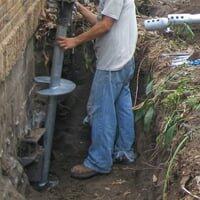
Helical piers are engineered steel foundation supports designed to transfer the weight of a structure from unstable surface soils to stronger, load-bearing soil or bedrock deeper underground.
Unlike traditional foundation supports, these piers feature circular, screw-like plates called helices attached to a steel shaft. This unique design allows the piers to be mechanically advanced into the ground with minimal soil disturbance.
Once installed, the piers provide a stable foundation support system that helps reduce the risk of continued settlement.
How Do Helical Piers Work?
When a home’s foundation begins to settle, the problem often starts beneath the surface. Expansive clay soils, changes in moisture levels, and poorly compacted soil can all contribute to foundation movement.
Helical piers for foundation repair address these issues by transferring the home’s structural load to more stable soil layers.
Step 1: Foundation Inspection
Before installation begins, Vesta Foundation Solutions performs a thorough inspection to identify signs of settlement and determine whether helical piers are appropriate for the home.
Step 2: Pier Installation
Using specialized hydraulic equipment, our team advances steel piers into the ground. The helical plates help guide the shafts through the soil until the required depth and load-bearing capacity are achieved.
Step 3: Foundation Stabilization
Once the piers are properly positioned, steel brackets connect the system to the home’s foundation. The structural load is then transferred from the unstable soil to the deeper, more reliable support layers.
Step 4: Potential Foundation Lifting
Depending on the home’s condition, the system may also allow portions of the foundation to be lifted toward their original position. However, the primary goal is to stabilize the structure and help prevent further settlement.
Benefits of Helical Piers for Foundation Repair
Helical pier systems offer several advantages for homeowners experiencing foundation problems.
- Long-term stabilization: Provides structural support by transferring weight to more stable soil.
- Minimal excavation: Installation typically requires less extensive digging than many traditional foundation repair methods.
- Versatile applications: Can support a variety of residential structures and foundation types.
- Engineered support: Pier depth and capacity are determined by the structural requirements and soil conditions.
- Potential foundation lifting: In some cases, settled portions of the home can be raised toward their original elevations.
- Durable construction: Steel components are designed for long-term performance, with corrosion protection selected for site conditions.
These benefits make helical piers a practical option for homeowners looking to address settlement before additional structural damage develops.
Warning Signs Your Home May Need Foundation Support
Foundation settlement doesn’t always happen overnight. In many cases, homeowners notice small changes before more serious problems develop.
Common warning signs include:
- Stair-step cracks in exterior brick walls
- Doors and windows that stick or no longer close properly
- Uneven or sloping floors
- Gaps around windows and door frames
- Cracks in interior drywall
- Separation between walls, ceilings, or floors
While these symptoms don’t always indicate serious foundation damage, they can signal movement beneath your home.
If you’re experiencing several of these issues, scheduling a professional foundation inspection can help determine the underlying cause.
Why Foundation Settlement Is Common in Oklahoma
Oklahoma homeowners face unique challenges when it comes to foundation stability. The region’s expansive clay soils can swell when exposed to moisture and shrink during dry conditions.
As the soil repeatedly expands and contracts, it can create uneven support beneath a home’s foundation.
Over time, this movement may contribute to cracking, shifting, and structural settlement.
Helical piers for foundation repair can help address these concerns by supporting the home on deeper, more stable soil layers rather than relying solely on the changing conditions near the surface.
Trust Vesta Foundation Solutions for Lasting Foundation Support
Your home’s foundation plays an important role in its overall structural stability. Ignoring settlement problems can allow cracks, uneven floors, and other warning signs to become more severe.
At Vesta Foundation Solutions, our team provides professional inspections and customized repair recommendations to help homeowners protect their investments. Whether you’re noticing new cracks or dealing with ongoing foundation movement, we’re here to help you understand your options.
Don’t wait for foundation problems to get worse. If you’re considering helical piers for foundation repair, schedule your free inspection with Vesta Foundation Solutions today. Our team will evaluate your foundation, explain the cause of settlement, and recommend a solution designed to provide dependable, long-term support.